

Introduction to SLW double-tube spiral feeder
The SLW double-tube spiral feeder utilizes a cycloidal pin wheel reducer and is equipped with a VF frequency converter, offering a wide speed adjustment range, stable operation, low noise, compact structure, and small size. The spiral feeder can easily adjust the material flow rate to meet different production process requirements.
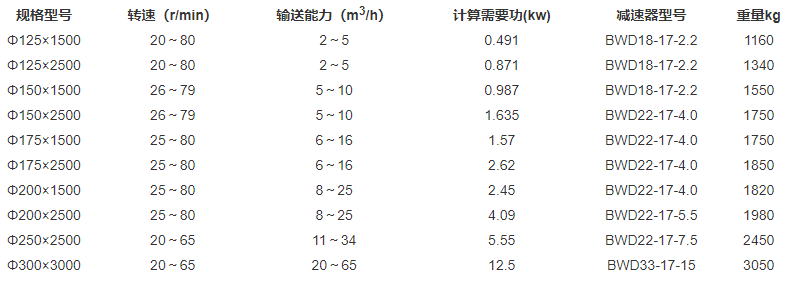
Technical parameters of SLW double-tube spiral feeder
Instructions for Use:
1. During installation, the longitudinal non-straightness and levelness tolerances of each casing and the frames at both ends of the screw feeder should be 1/1000 of the length. After the casing is properly installed, the base should be made firm, and then the anchor screws should be tightened.
2. The inlet and outlet of the spiral feeder shall be installed on site, with flanges connected and sealed with gaskets, ensuring no gaps.
After the SLW double-tube spiral feeder body is installed, check whether there is sufficient lubricating oil in each oil storage area.
4. The operation should be stable and reliable, with no oil leakage from the bearing housing and the bearing temperature rise not exceeding 20℃.
5. The feeding of the spiral feeder should be uniform during operation, otherwise it is easy to cause the accumulated blockage of the conveyed material and overload the drive device. Hard large pieces of material should not be mixed into the conveyed material to avoid damaging the machine body due to the spiral getting stuck.
6. It is necessary to ensure that the conveyor starts without load. Before stopping, the feeding should be stopped, and the conveyor can only be stopped after the material inside the casing has been completely conveyed.
7. When using the SLW double-tube spiral feeder, it is necessary to regularly check the working status of each component, pay attention to whether the transmission parts are operating smoothly, and add lubricating oil frequently.
Purpose of SLW double-tube spiral feeder
The spiral feeder is used for uniform and continuous feeding of dry powder materials such as coal powder, cement, grains, sand, and stones.

 CN
 EN
